Improv your pitch!

“Yes, I’ve read Impro by Keith Johnstone!”
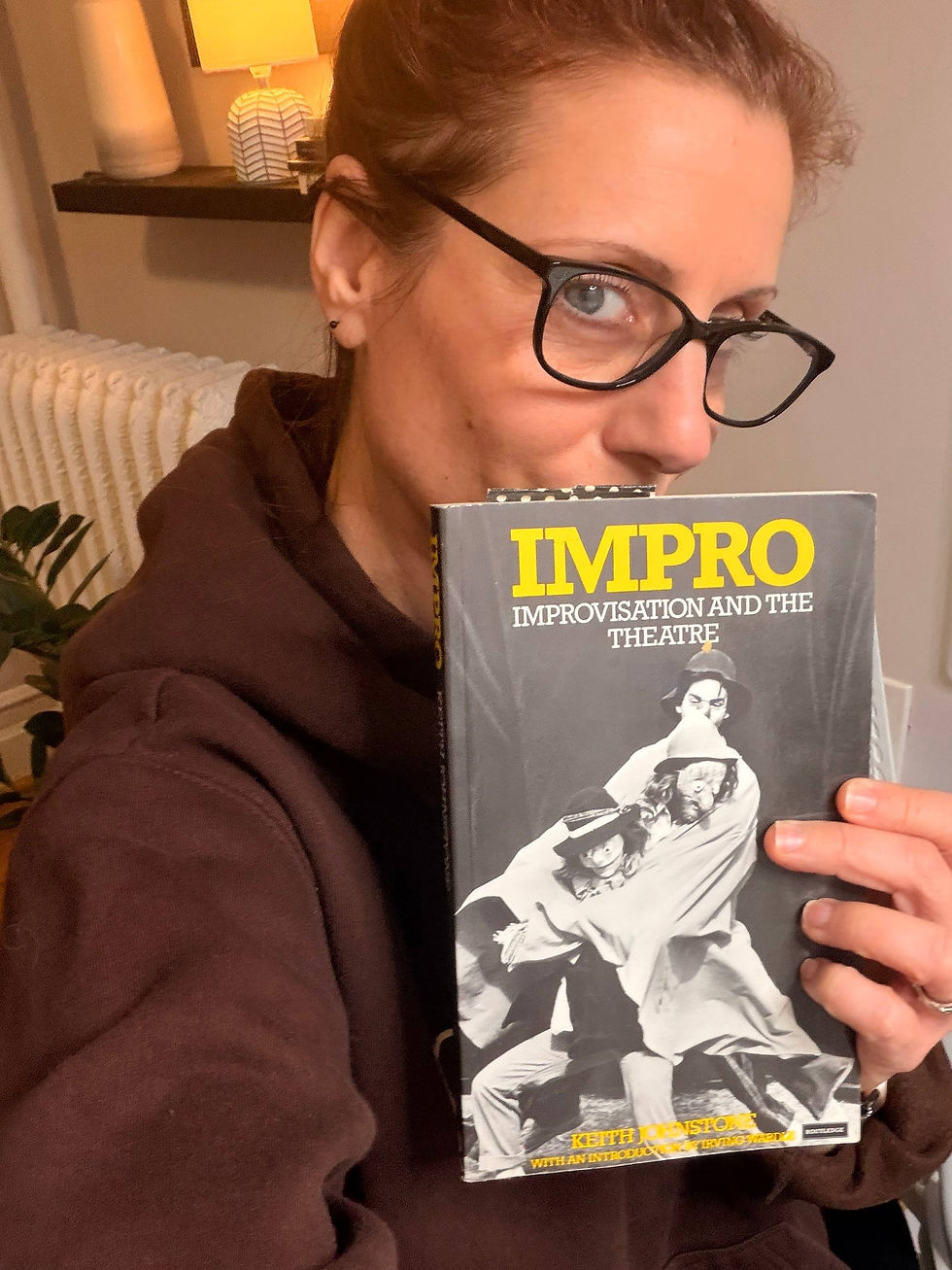
I said that a little too excitedly when a former client told me on the phone that recent guests on his podcast, who run a VC firm, now recommend this book to every founder pitching investors.
You have no idea how happy that made me.
Impro was one of the first books I read when I started studying improv. Keith Johnstone also created Theatresports in the 1970s, a competitive improv format where teams perform short games judged by the audience. It’s fast, high-pressure, and wildly fun. It also trains performers to stay bold, responsive, and connected while people are literally scoring them.
In college, I performed in a group called Clown Box Theater, and that Theatresports-style improv was a huge part of our world. It was playful, chaotic, electric. It’s also what made me want to keep studying improv more seriously. That training shaped how I think about communication to this day.
So when I hear that investors are pointing founders to this book, it makes total sense.
Pitching isn’t just a deck. It’s live. It’s human. It’s unpredictable. That’s improv territory.
Here are a few ways Impro and improv training help founders pitch better:
You stop trying to sound impressive and start being clear.
A lot of founders overload their pitch to prove credibility. Improv pulls you back to simple, direct choices. Clear lands.
You stay steady under pressure.
Theatresports means performing while being watched, judged, and timed. Sound familiar? You learn to stay in the moment instead of spiraling in your head.
You get better at Q and A.
Investors aren’t only listening to your answers. They’re watching how you think. Improv trains you to take what’s thrown at you and build from it, not freeze or get defensive.
You understand presence without posturing.
Johnstone talks a lot about status. Founders often slip into low-status habits, apologizing, over-explaining, shrinking. Or they swing too far and oversell. Improv helps you land in grounded confidence.
You actually listen.
Great pitches feel like conversations. When you’re trained to respond to real offers, you adjust in real time. You notice what investors care about and lean into that.
This is why improv lives at the core of my work with founders and leaders. It’s not about being funny. It’s about being responsive, human, and fully in the room.
If you lead a startup community, accelerator, or founder network and want your people to handle pressure, think on their feet, and connect more naturally with investors, this work fits beautifully.